
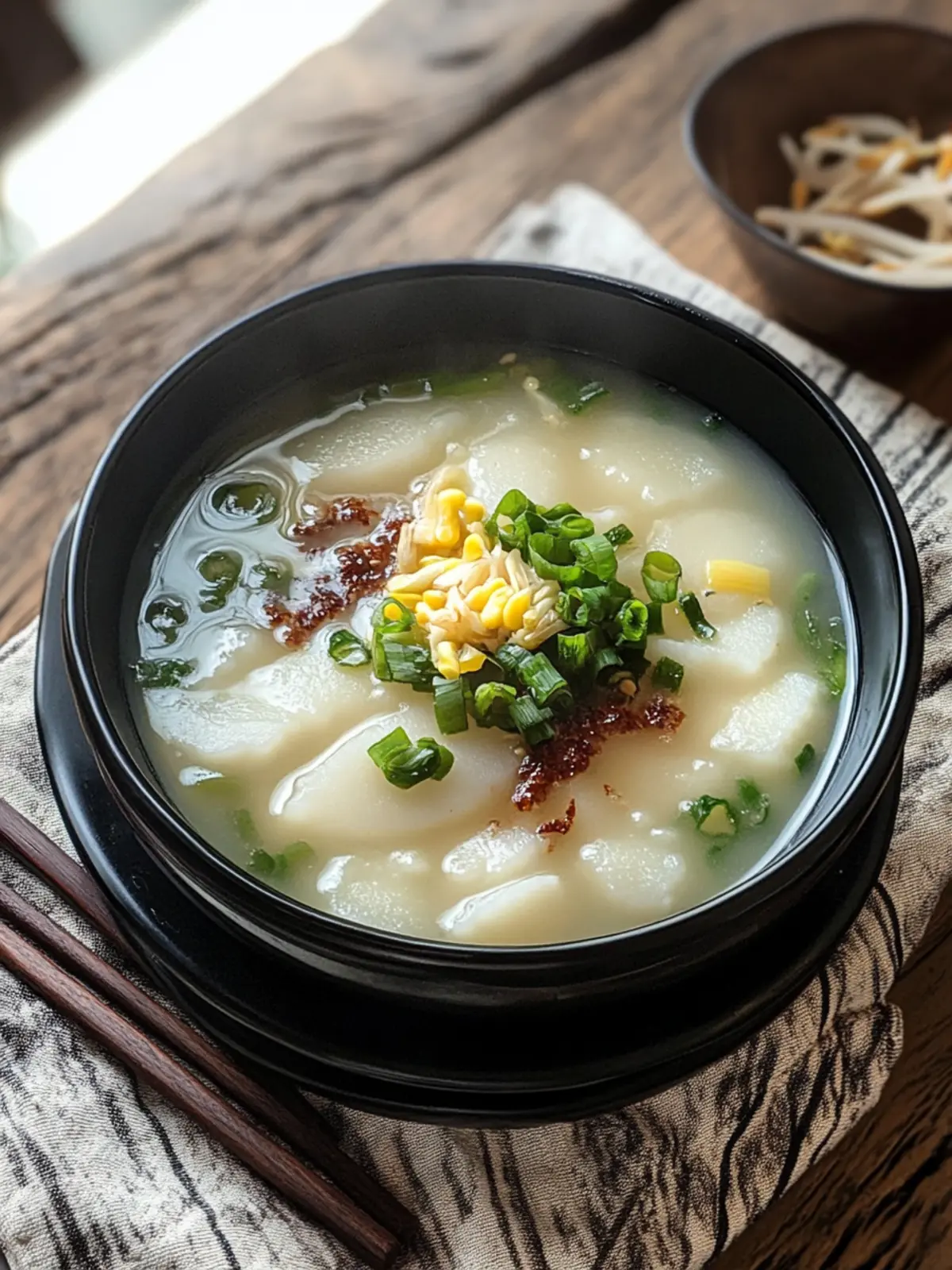
The first bite of Tteokguk, or Korean Rice Cake Soup, wraps you in warmth like a cozy blanket on a chilly day. As the steam rises from your bowl, the intoxicating blend of savory beef and aromatic garlic instantly transports you to bustling Korean kitchens, where generations have perfected this heartwarming dish.
I discovered this recipe during a quiet Sunday afternoon, eager to create something special for my family. The simplicity belies the richness of flavor, making it the perfect antidote to the takeout fatigue that so many of us experience. Picture this: tender rice cakes, floating amid a savory broth crafted from patiently simmered beef and radish, all topped with a sprinkle of green onions and a dash of sesame oil.
Whether you’re gathering family around the table or looking for a soul-soothing solo meal, Tteokguk is a delightful way to reconnect with the comforts of homemade food. Let’s dive into this recipe and bring a bit of Korea to your kitchen!

Why is Tteokguk a must-try dish?
Hearty Comfort: The warm, rich broth envelops you in a comforting embrace, perfect for chilly days or rainy afternoons.
Satisfying Texture: Soft, chewy rice cakes are the highlight, providing a delightful contrast against the tender beef.
A Flavorful Journey: The blend of savory soy sauces and fresh garlic transports your taste buds straight to Korea.
Quick to Make: Despite its depth of flavor, this dish requires minimal prep time, making it perfect for busy schedules.
Family-Friendly: This crowd-pleaser is sure to win over even the pickiest eaters, and it’s a fantastic way to introduce new flavors!
Culinary Tradition: Preparing Tteokguk connects you to a rich cultural heritage, making every spoonful even more special. You’ll definitely want to explore more homemade recipes to keep this culinary adventure going!
Tteokguk Ingredients
A few essential ingredients for a fulfilling experience!
For the Broth
- Beef brisket or beef rump – This choice yields a tender meat that enhances the flavor of the soup.
- Korean radish or daikon radish – Its natural sweetness balances the soup’s savory notes.
- Dried sea kelp (dashima) – Adds depth and umami to the broth, intensifying the savory experience.
- Onion – Sweetens the broth as it cooks, contributing to the overall richness.
- Garlic – Fresh garlic infuses aromatic flavor, vital for a comforting soup.
- Water – The base for an inviting broth that ties all flavors together.
For Seasoning
- Korean soup soy sauce (gukganjang) – Key for authentic flavor; don’t skip this for your Tteokguk!
- Korean tuna sauce – Adds an unexpected savory punch that elevates each spoonful.
- Salt – Essential for balancing flavors; add to your taste preference.
For the Rice Cake Mixture
- Rice cakes – The heart of Tteokguk, they’re chewy and soak up the delicious broth.
- Minced garlic – Boosts flavor and aroma in the rice cake mixture.
- Sesame oil – Drizzle for a nutty richness that beautifully complements the soup.
- Toasted sesame seeds – A final touch of crunch, enhancing both texture and flavor.
For Garnishing
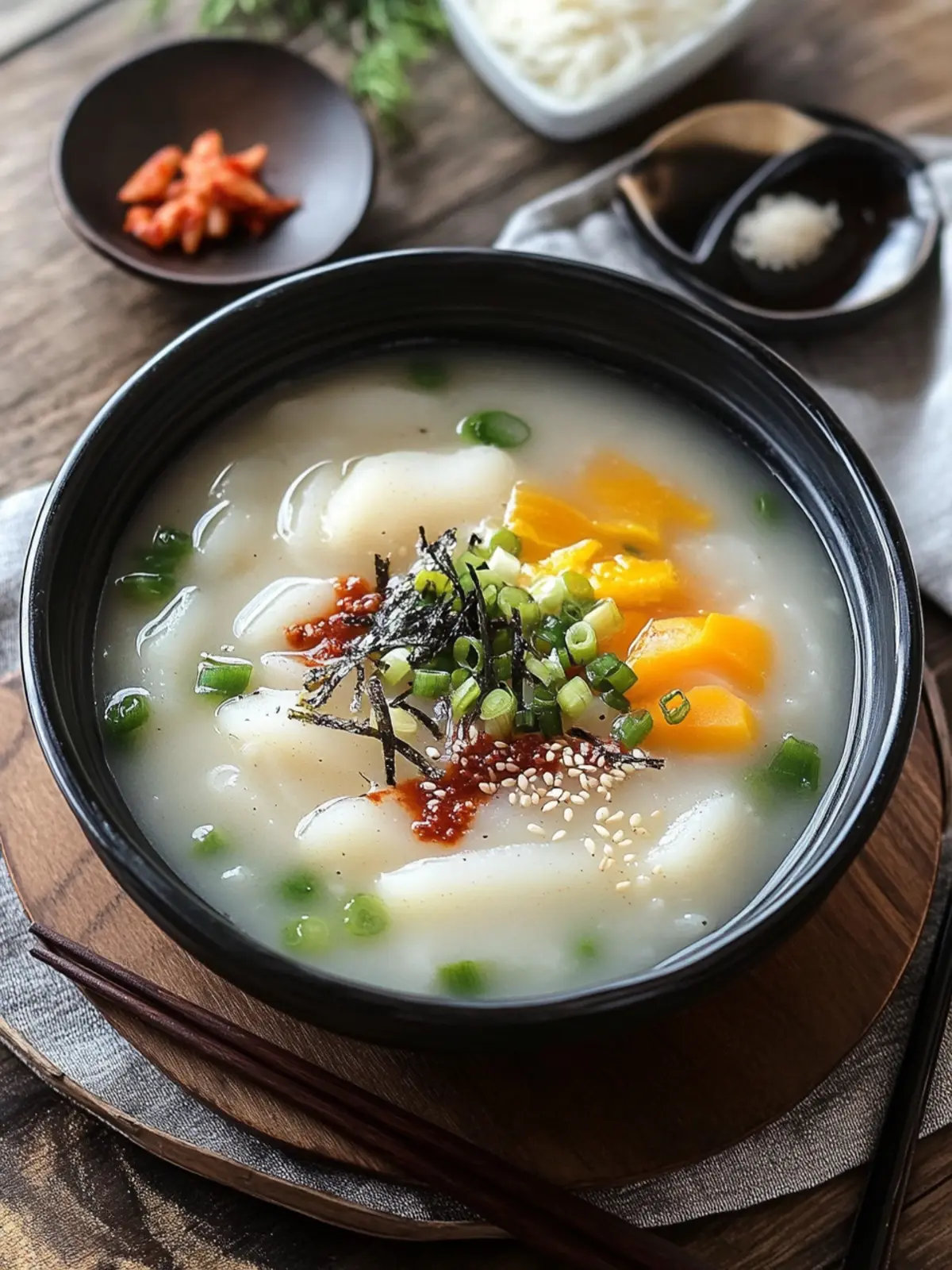
- Roasted seaweed (optional) – Crumbled, it adds a delightful finishing touch and a hint of ocean flavor.
- Green onions – Freshly chopped, they bring brightness and color to your hearty bowl.
- Black pepper – A sprinkle for that added spicy warmth.
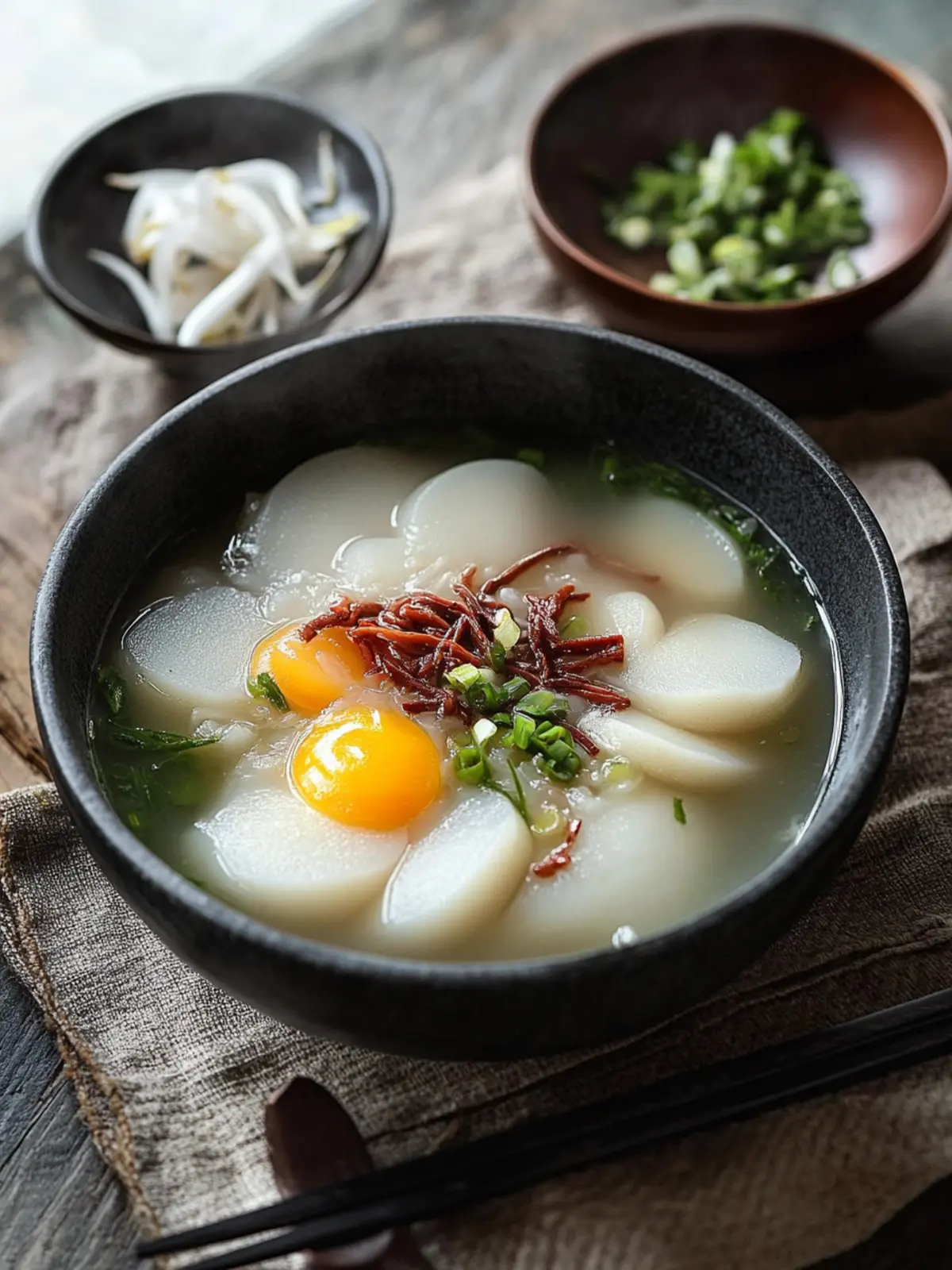
- Eggs (optional) – Separating and garnishing this soup with eggs adds a lovely creaminess.
Prepare these ingredients, and get ready to create a bowl of Tteokguk that’s not only nourishing but also a joyful meal to share with loved ones!
How to Make Tteokguk
-
Combine Ingredients: In a large pot, bring together the beef, radish, kelp, onion, garlic, and water. Heat until it boils, then reduce the heat and let it simmer for several hours, allowing the flavors to meld into a rich broth.
-
Strain the Broth: After your broth has simmered, carefully remove the beef and strain the liquid to eliminate any solids. Return the clear broth to the pot for the next steps.
-
Season the Beef: Mix the cooked beef with minced garlic, soup soy sauce, sesame oil, and toasted sesame seeds. This will enrich the flavor of the beef before it returns to your soup.
-
Add Rice Cakes: Introduce the rice cakes into the broth along with the Korean tuna sauce and salt. Stir well and let it all cook together until the rice cakes are heated through and deliciously tender.
-
Enhance the Broth: Stir in sesame oil, crumbled seaweed (if desired), green onions, and black pepper. Continue cooking until everything is warmed and the flavors meld beautifully in the pot.
-
Garnish and Serve: If you’re feeling indulgent, garnish your Tteokguk with separated eggs for an extra layer of creaminess. Serve hot and enjoy the comforting warmth!
Optional: Top with extra green onions for a fresh finish.
Exact quantities are listed in the recipe card below.
Make Ahead Options
Tteokguk is an excellent choice for meal prep, allowing busy cooks to enjoy a comforting homemade dish with ease. You can prepare the beef and broth up to 3 days in advance. Simply follow the cooking steps until your broth is ready, then refrigerate it in an airtight container. To keep your rice cakes from becoming too soft, store them separately until you’re ready to serve. When it’s time to enjoy your Tteokguk, reheat the broth, add the rice cakes, and follow the final steps to season and garnish. This ensures your dish remains just as delicious and fresh-tasting as if it were made the same day!
What to Serve with Tteokguk?
Bringing Tteokguk to the table is just the beginning; here are some excellent pairings to elevate your meal.
-
Steamed Vegetables: Serve a medley of vibrant steamed veggies like bok choy and carrots. Their freshness beautifully complements the rich broth.
-
Kimchi: This fermented side adds a spicy, tangy kick, enhancing the savory flavors of the soup and bringing an exciting contrast to your palate.
-
Crispy Rice Crackers: Light and crunchy, these provide a delightful textural contrast. Dip them in the broth for a unique snacking experience.
-
Korean Fried Chicken: Golden and crispy, this dish adds indulgence to your meal. The bold flavors of the chicken balance nicely against the cozy soup.
-
Sesame Spinach Salad: Tossed with sesame oil and garlic, this light salad introduces a refreshing crunch that brightens up the hearty Tteokguk experience.
-
Hot Green Tea: A soothing drink like hot green tea provides a calming finish to your meal, aiding digestion while enhancing flavors in the soup.
-
Sweet Red Bean Paste Pancakes: For dessert, try these sweet pancakes. Their sweetness harmonizes with the savory notes of Tteokguk, closing the meal perfectly.
Tteokguk Variations & Substitutions
Feel free to get creative and customize this delightful Tteokguk to suit your taste and dietary preferences!
- Vegetarian: Substitute beef with firm tofu and add extra vegetables like mushrooms or bok choy for a hearty and wholesome option.
- Spicy Twist: Include sliced fresh chili peppers or a dash of gochugaru (Korean red pepper flakes) to spice things up! This adds warmth and depth, inviting adventurous taste buds to savor the heat.
- Gluten-Free: Use tamari instead of Korean soup soy sauce to ensure a gluten-free broth without losing flavor. Your Tteokguk will remain satisfying and delicious!
- Extra Umami: Enhance the broth with a splash of fish sauce or a few dried anchovies for a deeper, richer flavor profile. This subtle addition can take your soup to the next level!
- Coconut Cream: For a creamy texture, swirl in a bit of coconut cream before serving. It adds a lovely sweetness and a unique twist on traditional Tteokguk.
- Zucchini Noodles: Swap rice cakes with spiralized zucchini for a lighter, low-carb version. The zucchini will gently soften in the broth, enriching the dish with fresh flavor!
- Herb Infusion: Experiment by adding fresh herbs like cilantro or parsley at the end for a burst of flavor and color. It’s a refreshing way to brighten your bowl!
- Broth Boost: Simmer with additional vegetables like carrots and celery to create a vegetable-rich broth. This not only enriches your soup, but also packs it with nutritious goodness!
With these variations, you can tailor your Tteokguk experience to suit any preference or occasion. Enjoy the journey of flavors!
Expert Tips for Making Tteokguk
- Use Quality Beef: Choose brisket or rump for tenderness; low-quality cuts can lead to a chewy texture, diminishing your Tteokguk experience.
- Simmer Gently: Avoid boiling the broth vigorously; low, slow simmering creates a richer flavor without cloudy broth—ideal for authentic Tteokguk.
- Fresh Garlic Matters: Use fresh garlic for maximum flavor. Dried garlic won’t provide the same aromatic quality necessary for a comforting soup.
- Strain Well: Remember to strain the broth properly! This step removes any solids and leaves you with a clear, flavorful base for your soup.
- Balance Flavors: Adjust the seasoning gradually. Taste as you go, as this ensures your Tteokguk hits all the right savory notes!
- Don’t Overcook Rice Cakes: Add rice cakes towards the end to prevent them from becoming mushy; their chewy texture is essential in this beloved dish.
How to Store and Freeze Tteokguk
Fridge: Store leftover Tteokguk in an airtight container for up to 3 days. Reheat on the stove over medium heat, adding a splash of water for moisture.
Freezer: Tteokguk can be frozen for up to 2 months. Place it in a freezer-safe container, leaving room for expansion, and thaw overnight in the fridge before reheating.
Separating Rice Cakes: For best results, freeze broth separately from the rice cakes, as they can become too soft when reheated.
Reheating: To reheat, gently simmer the thawed Tteokguk on the stove, stirring occasionally until heated through; this preserves the texture and flavor perfectly.
Tteokguk Recipe FAQs
How do I select the best beef for my Tteokguk?
Absolutely! For Tteokguk, I recommend using beef brisket or rump. Look for cuts that have a good amount of marbling; this fat contributes to a tender and flavorful broth. Ideally, the beef should be bright red, with a smooth texture, free from any unpleasant odors.
How should I store leftover Tteokguk?
Very good question! Leftover Tteokguk can be kept in an airtight container in the refrigerator for up to 3 days. When reheating, I suggest adding a splash of water to the pot—this helps maintain the soup’s moisture and prevents it from drying out.
Can I freeze Tteokguk, and if so, how?
Absolutely! Tteokguk can be frozen for up to 2 months. For the best texture, freeze the broth separately from the rice cakes. Use a freezer-safe container, leaving some space for expansion. When ready to enjoy, simply thaw overnight in the fridge, then reheat gently on the stove.
What should I do if the broth turns murky while cooking?
It’s crucial to simmer Tteokguk gently. If the broth turns murky, it may have boiled too vigorously. For a clear and rich broth, bring it to a boil, then reduce the heat to low and let it simmer uncovered for several hours. Straining the broth well at the end helps remove impurities and keeps it clear.
Is Tteokguk suitable for people with dietary restrictions?
Absolutely, Tteokguk can be adapted! If you’re making this soup for someone with gluten allergies, ensure to use a gluten-free soy sauce in place of gukganjang. Also, Tteokguk can be made vegetarian by substituting the beef with tofu and using vegetable broth instead. Just be sure to adjust the seasonings for enhanced flavor!
Can my pets eat Tteokguk?
It’s best to keep Tteokguk away from pets. Ingredients like garlic and onions can be harmful to dogs and cats. If you want to treat them, prepare a separate broth without these ingredients, ensuring it’s safe for your furry friends.
Savory Tteokguk: Comforting Korean Rice Cake Soup Recipe
Ingredients
Equipment
Method
- In a large pot, bring together the beef, radish, kelp, onion, garlic, and water. Heat until it boils, then reduce heat and simmer for several hours.
- After simmering, remove the beef and strain the liquid to eliminate solids, returning the clear broth to the pot.
- Mix the cooked beef with minced garlic, soup soy sauce, sesame oil, and toasted sesame seeds.
- Introduce the rice cakes into the broth along with the Korean tuna sauce and salt. Stir and cook until rice cakes are tender.
- Stir in sesame oil, crumbled seaweed, green onions, and black pepper. Cook until everything is warmed.
- Garnish with separated eggs if desired and serve hot.