
There’s a hidden treasure in my kitchen that effortlessly turns every meal into a celebration: the Miso Salmon Bowl. Picture this: the moment you open the oven, the sweet and savory aroma of caramelized miso fills the air, enveloping you in warmth and inviting comfort. I stumbled upon this delightful recipe after a long week of meal prep fatigue, and boy, was it a game changer!
This dish is not just quick and easy; it’s a stunning combination of textures and flavors—crisp cucumbers, luscious avocado, and perfectly roasted salmon drizzled with a creamy cashew sauce. Whether you’re looking to elevate your weeknight dinner or impress friends at your next gathering, this bowl has got you covered. Best of all, it’s a nourishing escape from the monotony of fast food, proving that homemade can be both simple and spectacular. Join me in crafting this delightful Miso Salmon Bowl that promises to awaken your taste buds with every bite!
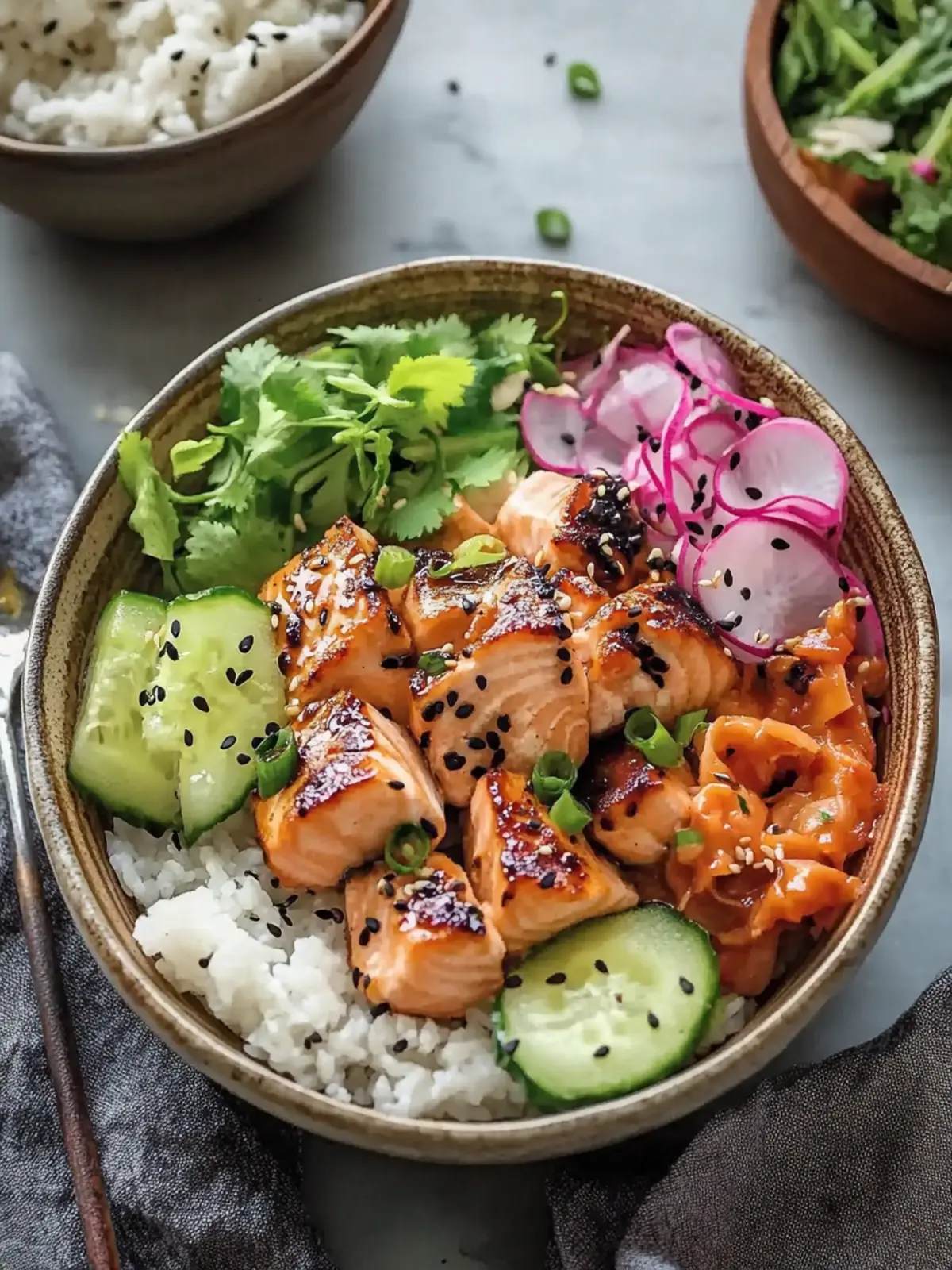
Why is the Miso Salmon Bowl a must-try?
Flavor Explosion: Miso Salmon Bowl is a delightful blend of sweet, savory, and umami flavors that will tantalize your taste buds.
Quick and Easy: With only 30 minutes from prep to plate, you can enjoy a gourmet dinner without spending hours in the kitchen.
Nutrient-Rich: Packed with healthy fats from salmon and avocados, this dish is as nourishing as it is delicious.
Customizable: Feel free to replace ingredients like rice or toppings to suit your personal preferences—endless possibilities await!
Crowd-Pleaser: Whether it’s a family meal or a casual get-together, this bowl will impress even the pickiest of eaters.
Take a moment and check out my other easy dinner recipes for more inspiring ideas!
Miso Salmon Bowl Ingredients
For the Miso Glaze
• Rice wine vinegar – adds a touch of acidity to balance the flavors.
• Soy sauce – imparts a savory depth and umami kick to the dish.
• White miso paste – the star ingredient, providing a rich, sweet, umami taste.
• Maple syrup – contributes a hint of sweetness that perfectly complements the miso.
• Sesame oil – enhances the dish with its nutty aroma and flavor.
For the Salmon
• Skinless salmon – the heart of the bowl; rich in omega-3 fatty acids and protein.
For the Cashew Sauce
• Cashew butter – adds creaminess and a hint of nuttiness.
• Rice vinegar – brings brightness and tang to the sauce.
• Garlic powder – infuses the sauce with a savory kick.
• Sriracha – gives a spicy note for those who like a little heat.
• Water – adjust to reach your desired drizzling consistency.
For the Bowl
• Sesame seeds – sprinkle on top for added crunch and flavor.
• English cucumber – offers a fresh, crisp contrast to the warm salmon.
• Avocado – adds creaminess and healthy fats for texture.
• Cooked rice – the hearty base that makes this bowl a filling meal.
• Pickled red onions – for a tangy zest that brightens the dish.
Each ingredient in this Miso Salmon Bowl contributes to a cherished dining experience that will leave you craving more!
How to Make Miso Salmon Bowl
-
Preheat the oven: Heat your oven to 425°F. While it warms up, slice the cucumber into thin 1/8-inch pieces and set aside. Remember to slice the avocado just before serving for freshness!
-
Whisk the glaze: In a small bowl, whisk together the white miso paste, soy sauce, rice wine vinegar, maple syrup, and sesame oil until smooth and well combined. This flavorful mixture is key for your salmon!
-
Prepare the salmon: Pat the skinless salmon fillets dry with paper towels and place them skin-side down on a parchment-lined baking sheet. Brush the prepared miso glaze evenly over each fillet for maximum flavor.
-
Roast the salmon: Bake the salmon in the preheated oven for about 10 minutes, or until it’s mostly cooked through. The aroma will start to fill your kitchen—so good!
-
Broil for caramelization: Switch your oven to broil on high and place the salmon 4-6 inches from the heat source. Broil for 4-5 minutes until the glaze caramelizes and forms a beautiful crust.
-
Rest the salmon: Remove the salmon from the oven and let it rest for about 2 minutes before serving. This allows the juices to redistribute, ensuring it’s tender and juicy.
-
Make the cashew sauce: While the salmon is broiling, whisk together the cashew butter, rice vinegar, garlic powder, sriracha, and maple syrup in a small bowl. Gradually add water until you achieve a drizzling consistency.
-
Assemble the bowls: Divide the cooked rice evenly between two bowls. Flake or slice the warm salmon and arrange it beautifully over the rice—the centerpiece of your dish!
-
Add toppings: Surround the salmon with the sliced cucumber, creamy avocado, and zesty pickled red onions for a colorful and delicious presentation.
-
Drizzle and serve: Drizzle the cashew sauce over each bowl and sprinkle with sesame seeds for a lovely crunch. Serve immediately, and enjoy every bite!
Optional: Garnish with fresh herbs like cilantro or scallions for an extra burst of flavor.
Exact quantities are listed in the recipe card below.
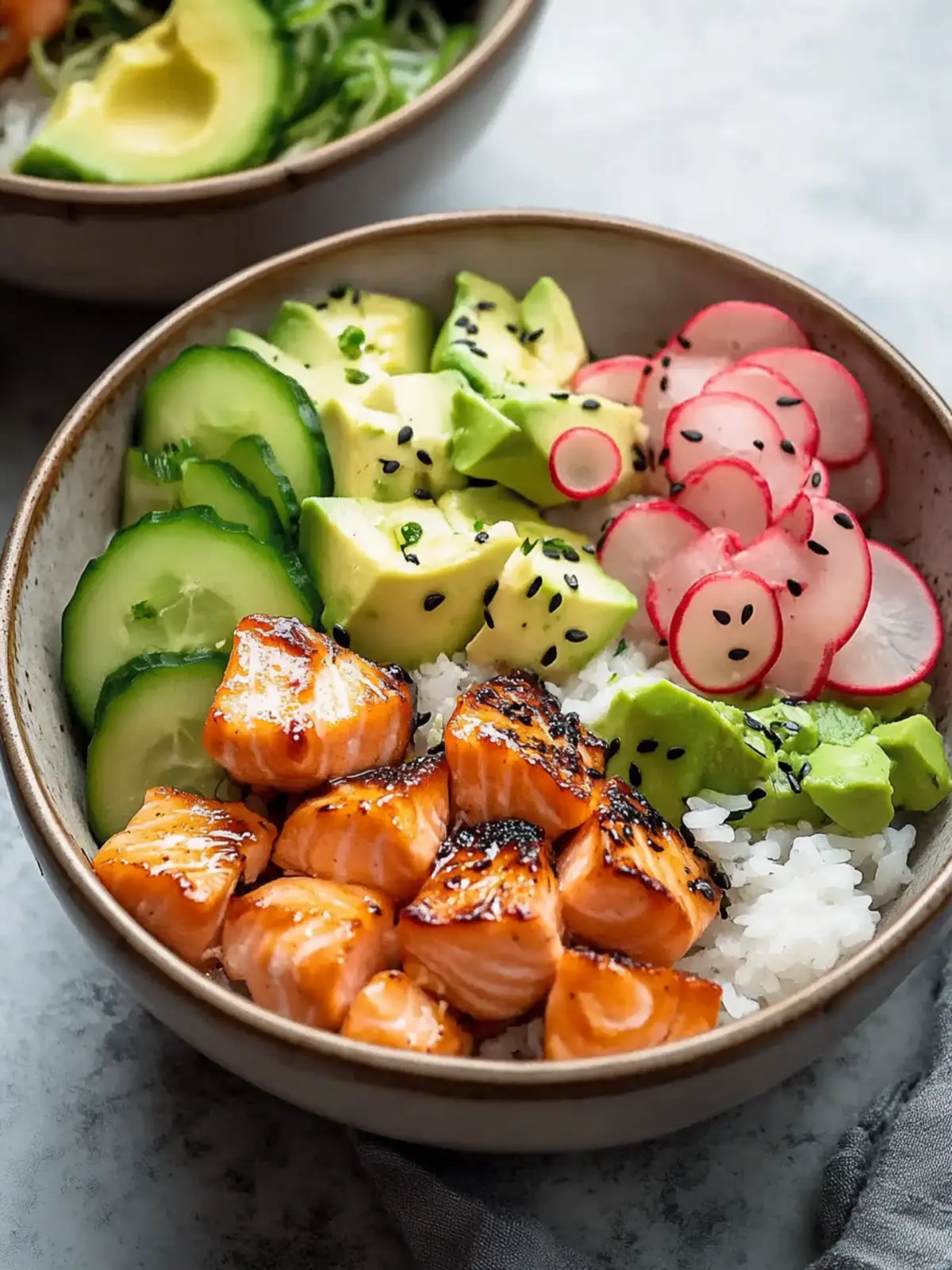
Expert Tips for the Miso Salmon Bowl
• Perfect Salmon: Use skinless salmon fillets for a tender, flaky texture. Pat them dry to help the glaze stick better!
• Miso Balance: Adjust the sweetness of your glaze by experimenting with the amount of maple syrup. Taste as you go!
• Consistency Matters: When whisking the cashew sauce, add water slowly to ensure you reach your desired drizzle consistency without making it too watery.
• Broiling Tips: Keep an eye on the salmon while broiling; it can caramelize quickly. Aim for a golden-brown crust without burning!
• Prep Ahead: Cut your veggies and make the glaze in advance. It saves time and keeps everything fresh when you’re ready to assemble the Miso Salmon Bowl.
• Serving Suggestion: For added flavor, drizzle with extra sriracha or top with fresh herbs like cilantro before serving!
How to Store and Freeze Miso Salmon Bowl
Fridge: Store any leftovers in an airtight container for up to 3 days to maintain freshness. Reheat gently in the microwave until warmed through.
Freezer: You can freeze the cooked salmon for up to 2 months. Wrap it tightly in plastic wrap and then in aluminum foil to prevent freezer burn.
Reheating: Thaw frozen salmon in the refrigerator overnight before reheating. Heat in the oven at 350°F or in the microwave until heated through.
Toppings Storage: Keep toppings like cucumber and avocado separate in the fridge, as they’re best served fresh.
What to Serve with Miso Salmon Bowl?
Elevate your dining experience with delightful sides that enhance the vibrant flavors of your bowl.
-
Steamed Asparagus: The earthy crunch of asparagus adds a fresh contrast, making every bite vibrant and lively.
-
Quinoa Salad: A protein-packed salad with cucumbers and cherry tomatoes brings a refreshing burst of flavors to complement the savory salmon.
-
Garlic Edamame: Served warm and sprinkled with sea salt, these provide a pop of umami taste, perfectly balancing the richness of the salmon.
-
Sesame Broccolini: Tender and slightly charred, this dish offers a smoky undertone that plays beautifully with the miso glaze.
-
Chilled Soba Noodles: These nutty noodles tossed in sesame dressing offer a lovely textural contrast and refreshing chill alongside the bowl.
-
Miso Soup: The comforting warmth of a light miso soup creates a cohesive theme that enhances the meal experience.
-
Japanese Pickles: Bright and tangy, these add an exciting crunch and balance the flavors with their acidity.
Enjoy pairing these delightful sides with your Miso Salmon Bowl for a truly memorable meal!
Make Ahead Options
These Miso Salmon Bowls are a fantastic choice for meal prep enthusiasts looking to save time during busy weeknights! You can prepare the miso glaze and cashew sauce up to 3 days in advance; simply store them in airtight containers in the refrigerator to maintain their delicious flavors. Additionally, slice the cucumber and avocado just before serving to keep them fresh. When you’re ready to enjoy, just roast the salmon as directed and assemble the bowls with the prepped ingredients. This way, you can have a delightful, restaurant-quality meal on the table with very little effort—perfect for those hectic evenings!
Miso Salmon Bowl Variations
Feel free to explore delicious twists that will make your Miso Salmon Bowl even more exciting and tailored to your taste buds!
- Dairy-Free: Substitute cashew butter with tahini or sunflower seed butter for a nut-free option.
- Whole Grain: Swap white rice for brown rice or quinoa for an added nutritional punch and earthy texture.
- Vegetable Boost: Add steamed broccoli, snap peas, or bell peppers for vibrant colors and extra crunch in your bowl.
- Fresh Herbs: Toss in fresh cilantro or basil for a fragrant lift that complements the rich flavors.
- Spicy Kick: Increase sriracha in the cashew sauce or add pickled jalapeños for those who love a little heat.
- Sweet Swap: Replace maple syrup with honey or agave for a different sweet note, while still being delightful.
- Bowl Base: Change cooked rice to cauliflower rice for a low-carb alternative that’s still filling and satisfying.
- Fish Variation: Use grilled tuna or shrimp instead of salmon to vary the fish or seafood flavor while keeping it equally delicious.
The beauty of this bowl lies in its versatility—don’t hesitate to make it your very own!
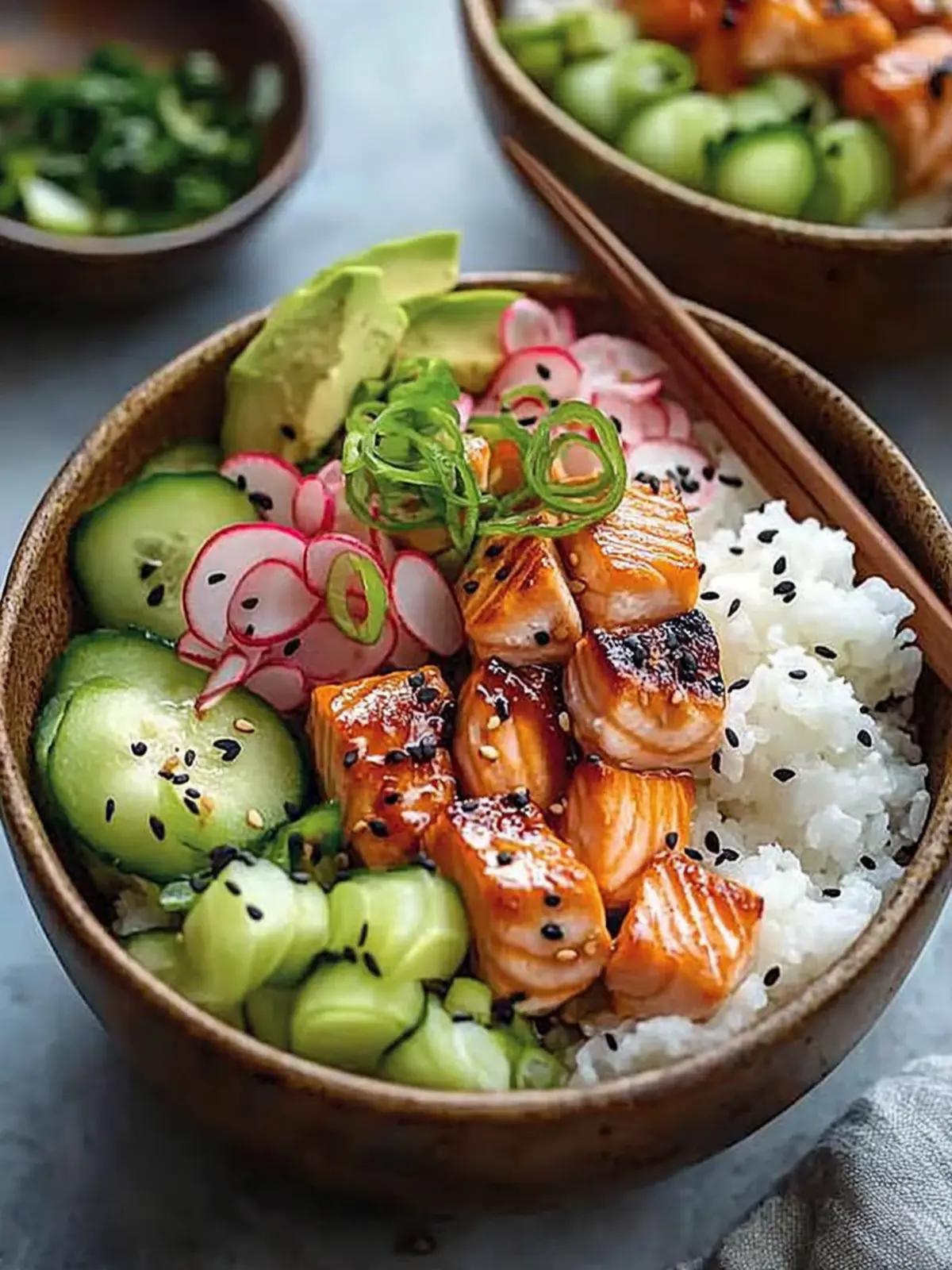
Miso Salmon Bowl Recipe FAQs
What type of salmon is best for the Miso Salmon Bowl?
Absolutely! I recommend using skinless salmon fillets for a tender texture and better flavor absorption from the miso glaze. Look for bright, firm salmon with a vibrant color—this indicates freshness.
How should I store leftovers of the Miso Salmon Bowl?
You can store any leftovers in an airtight container for up to 3 days in the fridge. When you’re ready to enjoy the leftovers, gently reheat in the microwave until warmed through, but be careful not to overcook the salmon.
Can I freeze the Miso Salmon Bowl?
Yes, you can freeze the cooked salmon for up to 2 months! To do this, wrap it tightly in plastic wrap, followed by aluminum foil, to prevent freezer burn. When you’re ready to eat, thaw it in the refrigerator overnight before reheating.
What if my miso glaze isn’t thick enough?
No worries! If your glaze is too runny, you can thicken it by simmering it gently on the stovetop for a few minutes. This will concentrate the flavors and help it adhere better to the salmon. Make sure to whisk it constantly to prevent burning.
Can I make this Miso Salmon Bowl vegan?
Yes! For a vegan version, you can substitute the salmon with marinated tofu or tempeh. Use the same miso glaze to brush it and follow the roasting instructions—just adjust the time, as tofu will cook faster!
Are there any allergen considerations with the Miso Salmon Bowl?
Absolutely! The cashew sauce contains nuts, so those with nut allergies should either omit it or substitute with sunflower seed butter. Additionally, check the specific brands of soy sauce used, as some may contain gluten; opt for gluten-free alternatives if needed.
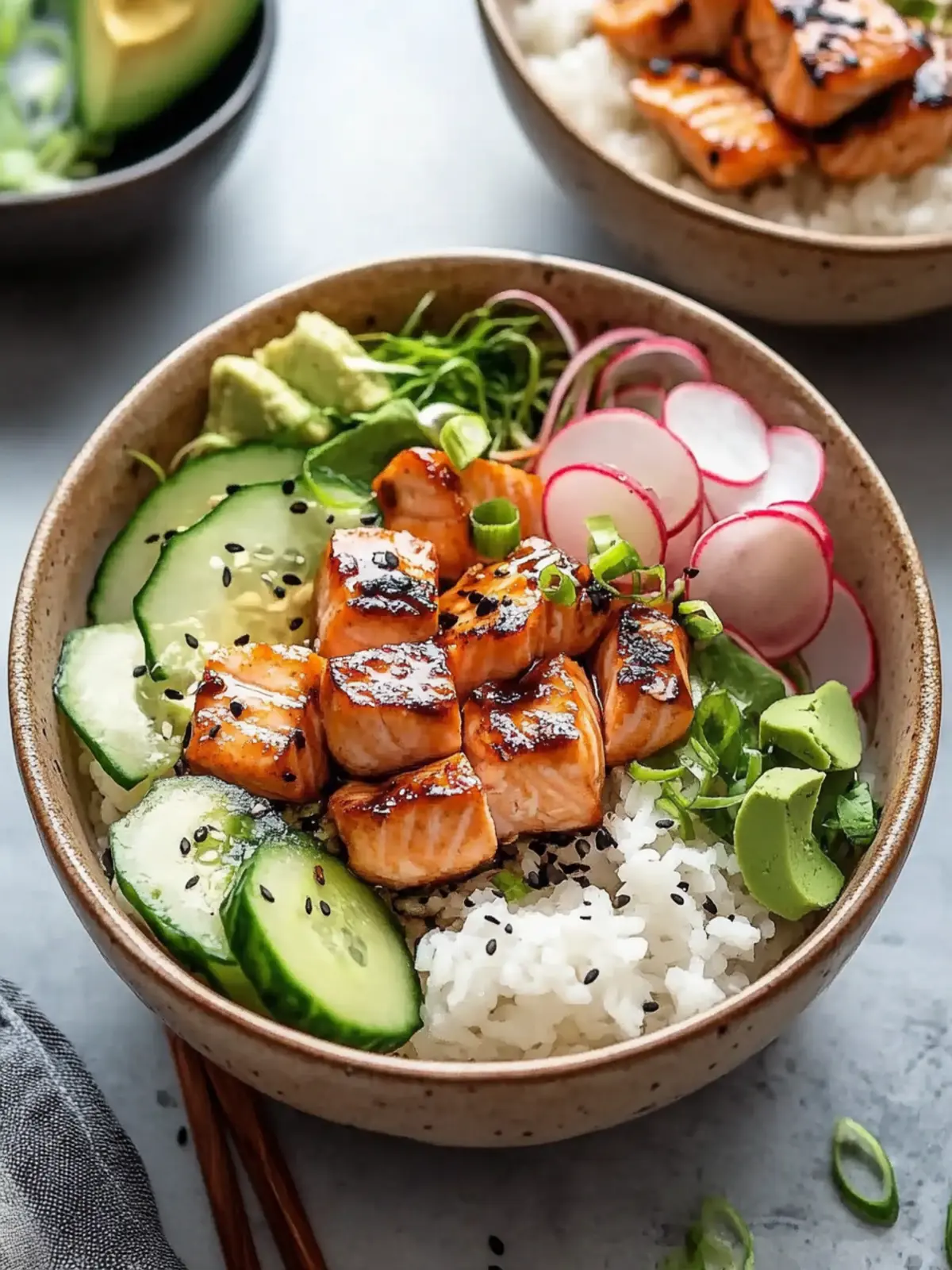
Miso Salmon Bowl: A Flavorful and Healthy Dinner Delight
Ingredients
Equipment
Method
- Preheat the oven: Heat your oven to 425°F. While it warms up, slice the cucumber into thin 1/8-inch pieces and set aside. Remember to slice the avocado just before serving for freshness!
- Whisk the glaze: In a small bowl, whisk together the white miso paste, soy sauce, rice wine vinegar, maple syrup, and sesame oil until smooth and well combined.
- Prepare the salmon: Pat the skinless salmon fillets dry with paper towels and place them skin-side down on a parchment-lined baking sheet. Brush the prepared miso glaze evenly over each fillet.
- Roast the salmon: Bake the salmon in the preheated oven for about 10 minutes, or until it's mostly cooked through.
- Broil for caramelization: Switch your oven to broil on high and place the salmon 4-6 inches from the heat source. Broil for 4-5 minutes until the glaze caramelizes.
- Rest the salmon: Remove the salmon from the oven and let it rest for about 2 minutes before serving.
- Make the cashew sauce: While the salmon is broiling, whisk together the cashew butter, rice vinegar, garlic powder, sriracha, and maple syrup in a small bowl. Gradually add water until you achieve a drizzling consistency.
- Assemble the bowls: Divide the cooked rice evenly between two bowls. Flake or slice the warm salmon and arrange it over the rice.
- Add toppings: Surround the salmon with the sliced cucumber, creamy avocado, and zesty pickled red onions.
- Drizzle and serve: Drizzle the cashew sauce over each bowl and sprinkle with sesame seeds for crunch. Serve immediately!